Making Whey Protein
Every whey protein production line is unique. Let’s talk about your process and explore how we can help you improve it.
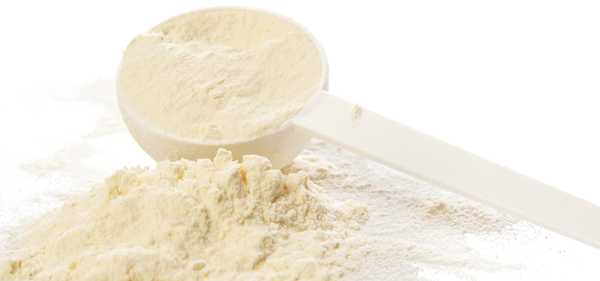
Filtering and drying liquid whey to make powdered whey protein
Whey protein is a natural, high-quality protein found in cow’s milk. Containing all 9 essential amino acids our body needs, such as leucine or lysine, whey protein is considered a complete protein. Add a starter culture to the milk and leave it to ferment until solid curds and liquid whey form. Now you can separate the whey (watery part of the milk) from the curds by draining it from the vat.
The whey protein goes through a microfiltration process where ceramic microfilters remove fats and carbohydrates and leave liquid whey protein as a result. A hot and cold air dryer removes the moisture turns the liquid whey protein into powdered whey protein. Flavorings can be added and blend in with a mixer for uniform distribution.

Whey protein shakes, energy bars, baked goods and much more
Whey protein and its derivatives contain amino acids that promote muscle growth and aid muscle recovery. It’s consumed in drinks like protein shakes and notable for its use in muscle development and fitness. Other food varieties such as protein bars or energy bars have whey protein as an ingredient. But in other industries, like bakeries and pastries, you can use whey protein as an ingredient for emulsifying, foaming, gelling, stabilizing, and nutritional properties. And in some cases, it is used as a substitute for egg whites.

Whey protein may come as a concentrate or isolate. The concentrate is the most common type available in the market. The isolate undergoes further processing to reduce fat and lactose content, making it the preferred choice for people who are lactose intolerant.
How to pack whey protein powder?
Whey protein powder packaging is available in flexible plastic bags, hard plastic bottles, and glass bottles. The packaging or containers are properly sanitized before being filled with whey protein. A powder filling machine is used to fill containers for precision and minimum waste. Then, it is weighed to make sure the net content is the same as in the label. After filling and weighing the product, it is sealed to avoid product aeration or contamination from exposure.
Production equipment solutions for whey protein

Basket extruder
Low pressure extrusion for the production of slightly dispersed dust-free granulates. For shingled, highly por...

Conical screw vacuum dryer
The conical screw vacuum dryer is particularly suitable for the final drying of powders, granules...

Unloader for conical bottom silos
Eliminate product flow challenges effortlessly with this hydraulic-driven unloader, ensur...

Ultrafine classifier for soft to medium-hard mineral processing
Achieve exceptional particle precision with an ultrafine...

Industrial filter press for dewatering and filtration
Optimize your dewatering and filtration needs with a highly adaptab...

Pressure drum filter for ultra fine-grained products
When traditional filtration methods fall short, ensure ultra-fine pr...

Feeder with flexible wall hopper
The varying properties of dry powder products mean that specialized feeders are required fo...

Waterproof checkweigher
Features waterproof and dust proof cabinet and components. Its hygienic design is perfect for unpacke...

Packaging machine for sealed plastic bags from 250 g to 10 kg
Sealing small quantities of solids or liquids into plastic...
There is currently no equipment listed with your specified properties, but we are sure we can help you. Try us!Contact us
Let's talk about your production line