Toothpaste Manufacturing Equipment
Every toothpaste production line is unique. Let’s talk about your process and explore how we can help you improve it.


So what goes into a tube of toothpaste?
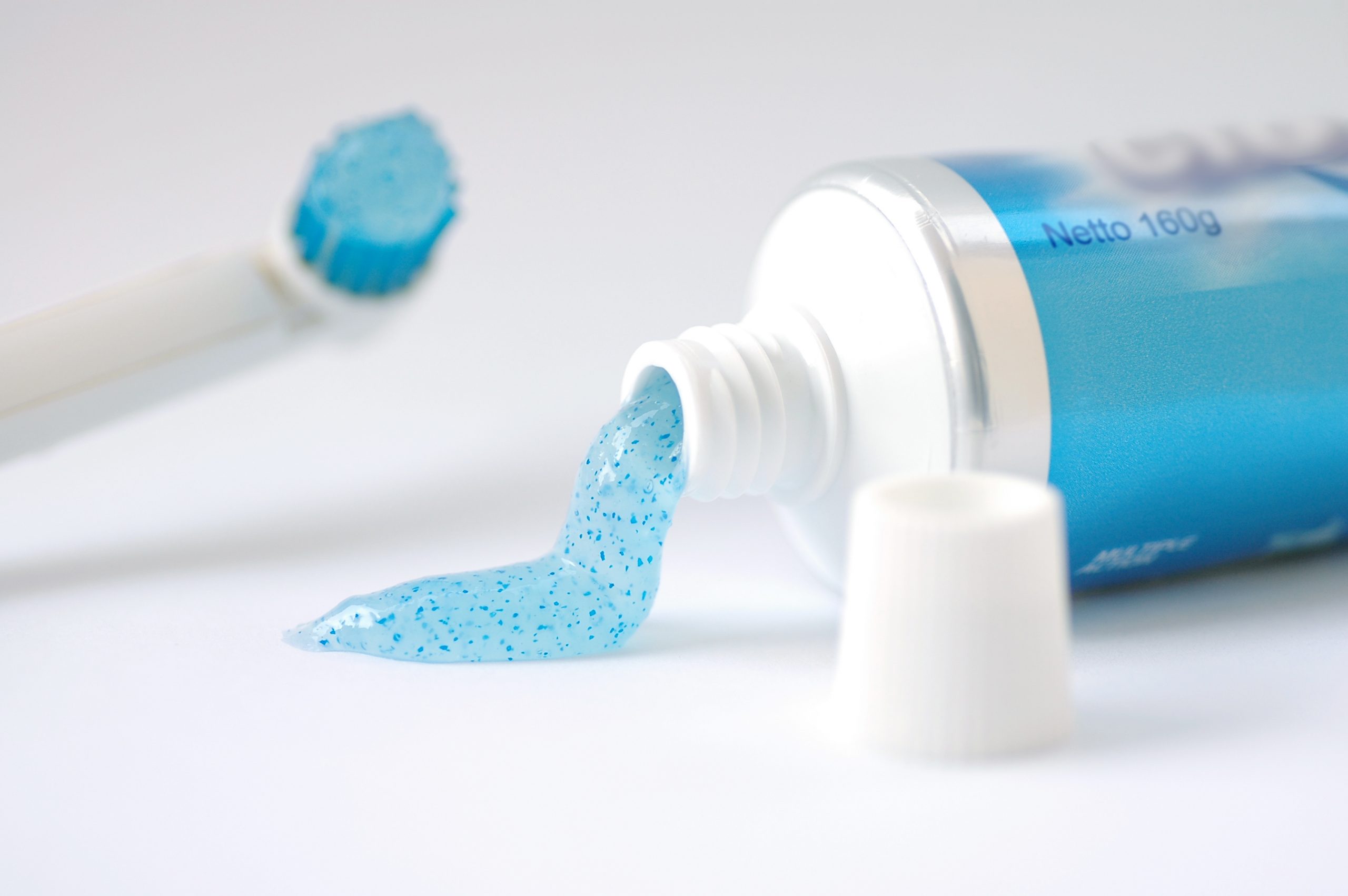
Try reading the label on your toothpaste. What you’ll get is a very long list of ingredients and complicated names like trisodium citrate dihydrate or xantham gum. Some toothpaste even include preservatives such as methylparaben and Sodium benzoate. To keep it simple, let’s break these ingredients down into different categories; first, abrasives.
They are the building block of your toothpaste (30-60% of your final product). Abrasives are essential if you want to scrape food or plaque off your teeth, to prevent cavities or dental disease.

Abrasives, binding agents and humectants in toothpaste production
Thickening and binding agents give the product the right viscosity and keep the shape of the toothpaste when you push it out of the tube. Without them, you’ll have a watery, runny mixture. The third category is humectants, which help retain water and prevent the product from drying out. In addition, humectants are sweet, but not as sweet as sugar. For this reason, some manufacturers may decide to add sweeteners such as saccharine. Other ingredients include flavors, foaming agents, fluoride, and water.
Toothpaste making equipment – what do you need in your production line?
Once the chemical ingredients arrive at the plant, they are ready to be measured and weighed by a check weigher or any weighing equipment. Once you get the correct amounts, you can move on to the mixing step. You first mix the water, humectant (usually glycerin or sorbitol), and hydrophilic colloids (binders). The hydrophilic colloids swell in the presence of the water and are critical in preventing the separation of the solid and liquid phases. That is why a mixer is a crucial step in toothpaste production but also in emulsions, ointments, lotions as well as shampoo.
Now it’s time to add all the rest of the ingredients and mix everything together using a vacuum homogenizer mixer. Homogenization reduces the particles of ingredients by distributing them evenly in the liquid medium. Now it’s up to the imagination of the producers. Different coloring and flavoring agents can be added to the white paste – blue or green, mint or peach, you name it. If you want to stick to the white variety, it is the titanium dioxide that gives toothpaste its white color.

Everyone loves stripes – How to fill them in your toothpaste tube?
It’s been a while since Leonard Maraffino invented the first striped toothpaste; but since then, its popularity has only grown. Getting the stripes, as complicated as it may seem at first glance, is a very simple thing. After mixing, the toothpaste is sent to the filling station. One end is capped while the opposite end is left open for filling. The filling pump consists of three or four nozzles that inject a different color into the tube at the same time. Once the tube is filled, the machine crimps the end; so now you can pack the tubes in boxes and ship them.

Is there any difference between adult toothpaste and children’s toothpaste?
The answer is yes. Besides the thousands of colors, fruit flavors – kids aren’t super fans of mint – and fun packaging, the key difference between the two kinds of toothpaste is the amount of fluoride. Fluoride is a naturally occurring mineral that prevents tooth decay and helps tooth enamel to be stronger. However, if it is swallowed in large amounts, fluoride can become harmful. During teeth-forming age (8 or younger) children are also more likely to develop dental fluorosis. This is the appearance of white spots on the surface of the teeth, caused by fluoride exposure.
Toothpaste making process
Toothpaste filling process
Toothpaste making process

Processing toothpaste into tablet form
Around a tenth of a toothpaste tube is water in the liquid phase. Concerns about water use and transportation costs are spurring innovative products in the form of tablets. The formula typically includes anti-bacterial sweeteners like xylitol and an abrasive like precipitated calcium carbonate. Mix the base ingredients ratios of the formula. Bind the powder particles with a wet or dry agglomeration system to facilitate the processing of the toothpaste tablet. Agglomerates prevent sticking when the formula is sent for compaction and punched through the dyes.
Production equipment solutions for toothpaste

Monoblock for filling and closing PE/Al tubes 15-250ml
When packaging creams, gels, or viscous products into tubes, you n...

Flexible R&D wet agitator mill for cosmetics
Using nanoparticles in cosmetics requires precise control over material break...

Flake crushers for gentle crushing of brittle materials
For processes needing precise granule control, our equipment ensu...

Ultra-fine grinding with ball mills and agitated media mills
Achieve precision in ultra-fine grinding for demanding mate...

Tube filler & sealer for metal and plastic tubes
Streamline your production line by efficiently filling and sealing metal ...

Efficient tube filler and sealer
Optimize your production line with a semi-automatic tube filling and sealing solution, desi...

Tube filling and sealing for metal and plastic tubes
Achieve precise tube filling and sealing with high speed and efficie...

Pilot plant homogeniser
From food to pharma, homogenization is an essential step in the production process that provides unif...

Flowmeter filler
For larger production runs of food, non-food and cosmetics industries, where accuracy and volume of filling i...

Compact monoblock filler
Filling and capping bottles and pots for food, chemical and cosmetics industries using separate mach...

Single head capper
For the stand-alone capping of bottles of up to 30 litre capacity for smaller-scale production you need a ...

Servo controlled filler
For food and non-food liquid products that are high foam or have a high viscosity a specialist fillin...

Inline batch mixer for solids and liquids
Several issues often arise when your process requires batch-wise mixing of powde...

Continuous homogenizing system
Certain mixing tasks present unique challenges and manufacturers need equipment that is speci...

High accuracy homogenizing system
When extremely high accuracy is required in your recipe or formulation traditional mixing...

Horizontal kneader
For high viscosity products, better results and reduced process times can be achieved with kneading type r...

Vertical kneader
Production of highly viscous products with high solid content often benefits from kneading processes rather t...

Continuous kneader
Effective mixing of highly viscous products with extremely high solids content can be difficult and the re...

Batch dispersing machine
Equipment operating under the rotor/stator principal is often employed when more traditional methods...

Batch dispersing machine for abrasive products
For mixing and dispersing tasks that cannot be completed by conventional st...

Batch dispersing machine for bottom entry into vessels
When your process requires high performance mixing or dispersion b...

Cost-effective homogenizing and emulsifying system
Manufacturers of cosmetic products need mixing equipment that is capab...
There is currently no equipment listed with your specified properties, but we are sure we can help you. Try us!Contact us
Let's talk about your production line